


Every day, we face hundreds of choices—from the moment we wake up until we fall back asleep. Some decisions are small and barely register. Others feel big, sometimes even life-changing. But if we stop for a second and ask ourselves, “Why do I actually choose what I choose?” the answer is often more layered than it seems. For most people, there is a tug-of-war between what we deeply believe in and what we just do automatically. This is the silent struggle between values and habits.
“Who we are is revealed by what we do when nobody is watching.”
What are values and habits?
If we open this up, values are the core beliefs that guide what we find meaningful, good, or right. They act like a north star—pointing towards who we want to be. Habits, on the other hand, are the things we do often enough that they happen almost without thinking. Patterns. Routines. Things we repeat, sometimes without even realizing we’re doing them.
- Values: Honesty, compassion, integrity, growth, freedom, respect, etc.
- Habits: Checking the phone first thing in the morning, drinking coffee, taking the same route to work, reacting defensively during arguments, and so on.
When these two forces come together, they either strengthen each other or create an uncomfortable friction. Many times, this plays out in the background, influencing our decisions in ways we rarely recognize.
How do values really influence decisions?
We all like to think we live by our values. If asked, most of us can list what matters most: kindness, family, health, honesty, or learning. Values help us set personal goals and direction. They make us say, “I won’t lie to my friend, even if it’s harder,” or, “I prefer to walk away from gossip.”
But daily life isn’t always so straightforward. Values shine most clearly in situations where we pause, reflect, and act on purpose. For example, when faced with a tough choice—like whether or not to speak up when something feels wrong—our values might push us out of our comfort zone. In those moments, values can be the engine that powers decisions aligned with our deeper sense of self.
When do habits take over?
Picture arriving at home and automatically reaching for snacks, barely thinking about it. Or sitting in a meeting and scrolling your phone as a reflex. Habits kick in without much thought because our brains look for shortcuts. They make complex lives easier to handle. More efficient, even.
Habitual behavior often runs on autopilot. This can be helpful—imagine having to relearn how to brush your teeth every morning. But sometimes, these patterns run counter to our values. We may value health but keep overeating at night. We may value honesty but still let white lies slip out.
Why? Because habits are woven into our daily routine, often reinforced by comfort, repetition, or environment.
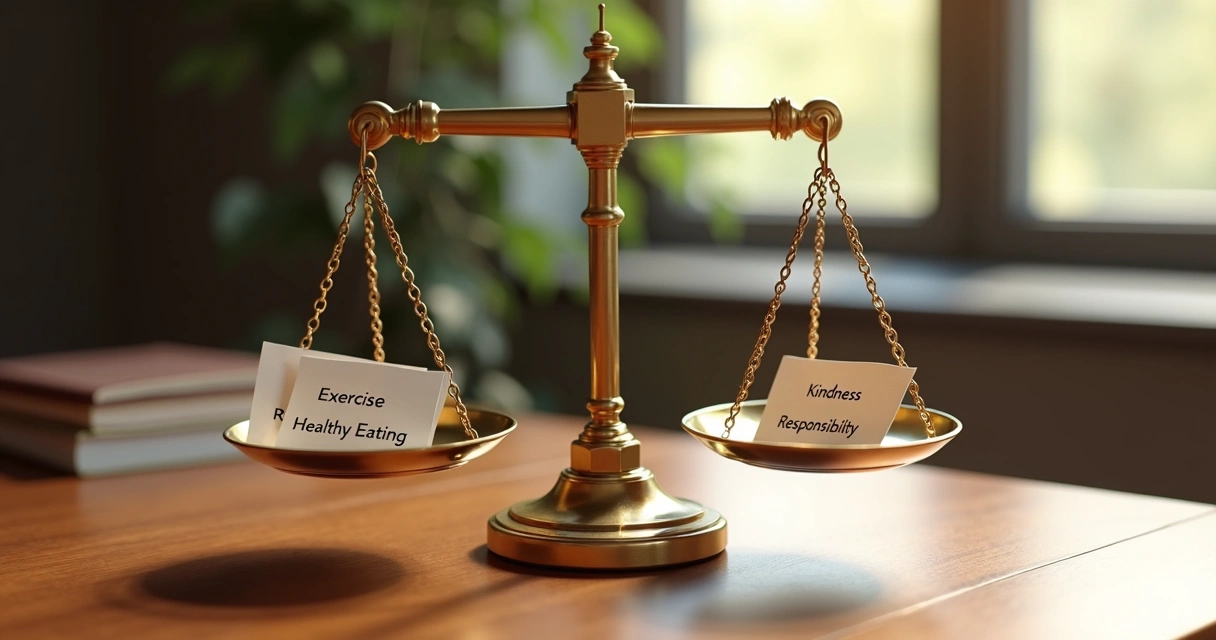
Why is there a gap between what we value and what we do?
As we see it, the gap between values and actions often comes from old habits winning over new intentions. Say we value calm, but react with anger in traffic. Or we care about well-being, yet stay up late watching television. This happens for a few reasons.
- Habits have momentum. The more we repeat something, the easier it becomes—even if it doesn’t match our values.
- Immediate rewards matter. Habits satisfy a short-term desire (comfort, distraction, relaxation) while values may offer meaning in the long run.
- Environment supports autopilot. Our routines get comfortable, and changing them takes real effort.
Many of us have felt that sense of regret after acting in a way that doesn’t match our beliefs. We promise ourselves it will be different next time. But unless we change more than just our intention, next time arrives and we repeat yesterday’s behavior.
Can values and habits work together?
Absolutely. The real magic happens when values drive the formation of new habits. If we truly value learning, and we set aside even ten minutes each day for reading, that habit becomes a reflection of our values. Over time, the gap shrinks.
No one gets this perfect from the start. It’s a living process—a dance between reflection and action. When values inspire routines, and routines become habits, we start living more in line with what matters most.
There are clear steps to help turn values into habits:
- First, get honest about what you value most right now—without judgment.
- Spot habits that don’t fit these values.
- Choose one small, specific action to practice each day that ties directly to your value.
- Make it easy—set up your space, schedule reminders, ask a friend to check in.
- Celebrate small wins, and treat slip-ups as normal, not as failures.
In our experience, even a single change, repeated, can start to shift the balance from autopilot to purpose-driven living.
What shapes decisions more: values or habits?
This is the question at the heart of the matter. In routine situations, habits usually win—unless we intentionally pause and reflect. But when we are aware, values can redirect us, even disrupting years-old patterns.
Both have a seat at the table. The more effort we put into linking the two, the less we find ourselves frustrated or stuck. People who practice aligning their habits with their values describe feeling more authentic and less conflicted inside.
“We become what we repeatedly do—especially when what we do reflects what we most deeply value.”

How self-awareness bridges the gap
Self-awareness is where the shift from habit-driven to value-driven choices begins. The simple act of noticing when a habit takes over is powerful. Even if the habit wins out for now, every moment of awareness makes it easier to nudge things in a new direction next time.
Building self-awareness doesn’t take special tools. It often starts by gently questioning ourselves—“Is this action in line with who I want to be?” Keeping a simple journal of small wins and slips can help, too. Over time, this creates space for reflection and, eventually, more intentional choice-making.
Conclusion
Values and habits are both always present. Habits shape most day-to-day decisions, but values have the power to step in especially when we choose to act consciously. The real challenge—and the real opportunity—is bringing the two closer together. Every small step toward aligning habits with values brings us closer to a life that feels genuinely our own. This, in our view, is not about willpower alone but about steady awareness, honest self-reflection, and a willingness to start again, one action at a time.
Frequently asked questions
What is the difference between values and habits?
Values are our guiding beliefs about what is meaningful and right, while habits are repeated behaviors or routines that often occur without much conscious thought. Values shape our intentions and long-term goals, but habits handle the small, daily choices on autopilot.
How do habits influence daily decisions?
Habits influence daily decisions by making certain behaviors automatic and easy to repeat. This means we tend to act based on past patterns rather than making conscious choices each time. Habits save mental effort but can lead us away from what we value if not aligned.
Can values change over time?
Yes. As we learn, grow, and face new experiences, values can shift and evolve. What matters most to us at one stage of life may be different later. This is a natural part of personal and collective maturity.
How to build habits aligned with values?
Start by identifying your top values, then choose one simple, repeatable action that reflects each value. Practice it daily, adjust your environment to support it, and be patient with yourself. Over time, these new routines slowly become habits that mirror what you care about most.
Are habits stronger than personal values?
In everyday moments, habits often win because they require less thought and effort. However, with self-awareness and intentional reflection, personal values can interrupt automatic habits and motivate real change. The key is to bring both into conscious alignment.