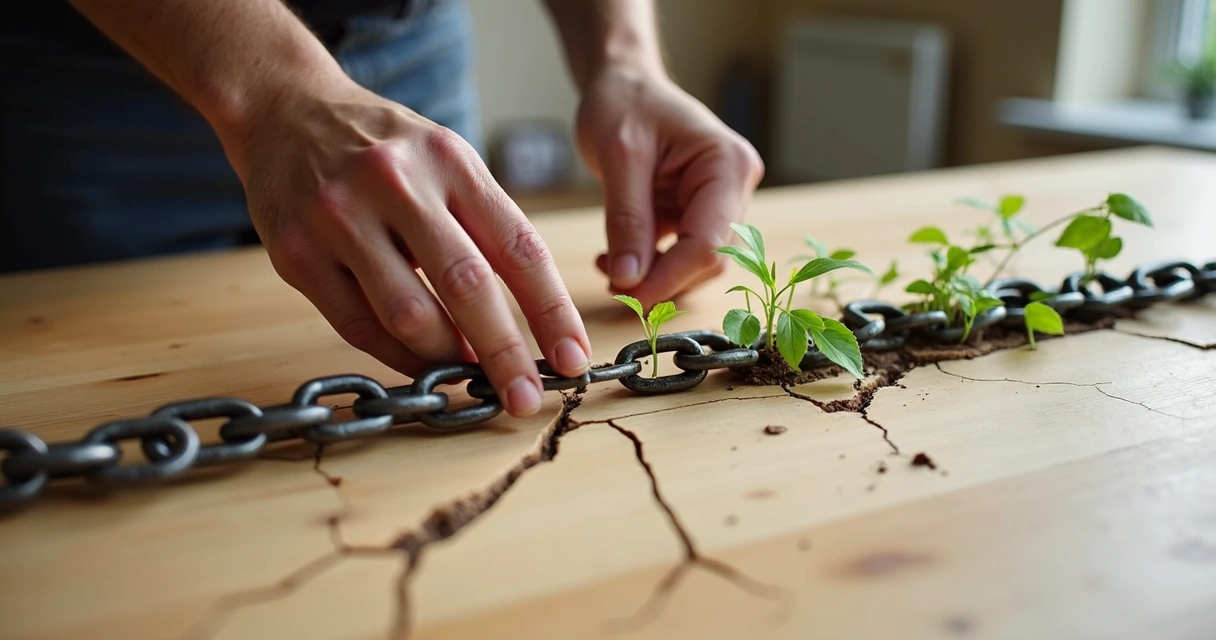


We often speak about anxiety as if it begins inside one person. A racing mind. Tight shoulders. Poor sleep. Constant worry. Those signs are real, but they are not the full picture. In our experience, anxiety in modern adults is often fed by a wider form of disconnection that shapes daily life long before symptoms become visible.
Systemic disconnection happens when people lose steady contact with supportive relationships, meaningful roles, inner balance, and a felt sense of belonging.
This does not always look dramatic. Sometimes it looks normal. A full inbox. A silent home. Group chats without real trust. Days filled with tasks but empty of presence. We may seem linked to everything, yet feel held by nothing.
That is where anxiety starts to grow. Quietly. Repeatedly. Systemically.
Why modern life leaves many adults disconnected
We live in a time of speed, mobility, and constant input. These conditions can make life easier in some ways, but they can also weaken the bonds that help us feel safe. Many adults move far from family, work in unstable settings, and build routines around screens instead of real contact. Little by little, the nervous system stops receiving signals of steadiness.
We have seen how this builds pressure in ordinary ways. A person wakes up already tense. Meals are rushed. Work is done in isolation. Evenings are spent scrolling, not recovering. Weekends pass without true rest. Nothing seems wrong enough to stop. Still, something feels off.
Disconnection is rarely loud.
It can show up through several linked patterns:
Weak social bonds, even when contact is frequent.
Work roles that demand performance but offer little meaning.
Family systems marked by silence, conflict, or emotional distance.
Digital habits that replace presence with stimulation.
Loss of inner connection through constant stress and self-neglect.
When these patterns gather over time, adults may begin to feel unsupported, unseen, and emotionally unrooted. Anxiety then becomes less of a random event and more of a logical response.
How anxiety grows in disconnected systems
Anxiety is not only fear of the future. It is also the body reacting to the absence of safety in the present. When we do not feel anchored in healthy systems, the mind starts scanning for danger. It asks, “Am I alone in this? Will anyone help? What happens if I fail?”
The nervous system reads chronic disconnection as risk, even when no visible threat is in front of us.
This helps explain why some adults feel anxious in very quiet moments. The meeting is over. The phone is down. The house is still. Yet the body remains alert. Without trusted connection, stillness does not feel restful. It feels exposed.
Research supports this pattern. In a longitudinal study on social disconnectedness, perceived isolation, and anxiety symptoms, weaker social ties predicted stronger feelings of isolation, which then predicted more anxiety over time. That finding matters because it shows that the outer structure of our relationships affects the inner emotional state that follows.
We think many adults miss this link. They try to solve anxiety only with control. More planning. More information. More mental effort. But if the root issue includes disconnection, control alone cannot calm the system.

What systemic disconnection looks like in adult life
Not everyone experiences disconnection in the same way. For some, it begins in family history. They learned early to stay guarded, useful, or invisible. For others, it forms later through burnout, divorce, relocation, grief, or years of surface-level contact.
We often notice a story behind the symptom. A person may say, “I do not know why I feel so anxious. My life is fine.” Then the details emerge. They have no one they can call without feeling like a burden. They do not trust rest. They have not felt deeply listened to in years.
Common signs include:
Feeling lonely even around other people.
Overthinking after simple social exchanges.
Struggling to ask for help.
Feeling numb, detached, or emotionally flat.
Staying busy to avoid inner discomfort.
Feeling that life lacks warmth, depth, or direction.
These signs are not proof of personal failure. They are signals. They tell us that something in the wider emotional system needs care.
Why digital contact is not the same as real connection
We value modern tools, but we also see their limits. Messages, feeds, and online updates can create the image of closeness without the felt experience of being known. A person may interact all day and still end the evening with a deep sense of distance.
Contact is not the same as connection, and stimulation is not the same as support.
Real connection usually includes a few things that digital life often weakens:
Eye contact and body cues that calm the nervous system.
Shared silence without pressure to perform.
Mutual care that is steady, not only reactive.
Conversations with depth, not only updates.
When adults rely only on fast forms of contact, anxiety can rise because the body still feels alone. We may be informed about each other without being truly connected to each other.

How we can begin to repair the gap
Healing anxiety linked to disconnection is not about becoming socially busy. It is about restoring forms of contact that create safety and meaning. We do not need hundreds of relationships. We need honest ones. We do not need perfect routines. We need steadier ones.
A helpful path often includes a few simple moves:
Name where disconnection is happening. Socially, emotionally, physically, or within family patterns.
Reduce habits that keep the nervous system on alert, such as constant checking and overexposure to noise.
Build small repeated acts of contact, like one real conversation each week or one device-free meal each day.
Reconnect with the body through rest, breathing, walking, and silence.
Seek spaces where truth is welcome and support is consistent.
We have found that small steady changes often work better than grand plans. One person we think of started with a ten-minute walk each evening without headphones. Then came one honest call to a friend each Sunday. Anxiety did not vanish overnight. But the body slowly stopped feeling abandoned.
Conclusion
Modern anxiety is not always caused by weakness, poor coping, or too much sensitivity. Very often, it grows inside disconnected systems that leave adults emotionally unsupported and inwardly scattered. When bonds thin out, meaning fades, and the body loses its sense of safety, anxiety has room to spread.
To calm anxiety, we often need more than coping tools. We need reconnection.
That reconnection may begin with one relationship, one boundary, one honest pause, or one new pattern of care. Small steps matter. They tell the mind and body that we are no longer facing life alone.
Frequently asked questions
What is systemic disconnection in adults?
Systemic disconnection in adults is a lasting break between a person and the sources of support that help them feel stable. This can include weak relationships, family strain, lack of belonging, emotional suppression, and routines that cut them off from their own needs.
How does disconnection cause anxiety?
Disconnection can make the nervous system feel unsafe. When adults do not feel supported, seen, or grounded, the mind becomes more alert to threat. This ongoing state of inner alertness can lead to worry, tension, sleep problems, and other anxiety symptoms.
What are signs of systemic disconnection?
Common signs include loneliness, numbness, trouble trusting others, overthinking after social contact, fear of asking for help, and feeling busy but emotionally empty. Some adults also notice that they feel restless even during quiet moments.
How can I reduce social disconnection?
We suggest starting small and staying consistent. Focus on one or two real relationships, make space for honest conversations, reduce screen-based noise, and create repeated moments of presence. Regular contact that feels safe and genuine can slowly reduce the sense of isolation.
Is therapy helpful for disconnection anxiety?
Yes, therapy can help a lot. It may help adults see hidden patterns, process old pain, build emotional awareness, and form safer ways of relating. For many people, therapy becomes one of the first places where real reconnection begins.