


Developmental psychology studies how people grow, change, and adapt throughout life, not only during childhood. For parents, educators, and adults reflecting on their own growth, it offers a way to understand how bodies, thinking, emotions, relationships, and life circumstances interact. Its most useful lesson is that development is a varied process, not a race through fixed milestones.
Key points about human development
- Development continues across the lifespan, although its pace and direction differ from person to person.
- Physical, cognitive, and social-emotional changes are connected and shaped by relationships and context.
- Age-based stages and milestones are helpful guides, not complete descriptions of an individual.
- For children, missed milestones or lost skills merit a conversation with a healthcare professional, not a diagnosis based on a checklist.
What does developmental psychology study?
The field examines changes in behavior and psychological processes over time. The American Psychological Association’s overview describes areas including physical, cognitive, social, emotional, perceptual, and personality development. These dimensions overlap: language can support relationships, while relationships can influence emotional regulation and learning.
| Area | What it can include | Everyday example |
|---|---|---|
| Physical | Growth, sensory abilities, movement, and changes associated with aging | A toddler gains balance and coordination |
| Cognitive | Attention, memory, language, reasoning, and problem-solving | A student learns to compare evidence before deciding |
| Social-emotional | Emotional understanding, identity, relationships, and social behavior | An adult learns to express disagreement without hostility |
A lifespan perspective also recognizes that change can move in different directions. A person may gain experience and emotional insight while facing new physical limits. Development is therefore not simply a climb toward one final state of maturity.
How do the stages of growth differ across life?
Life stages help organize common transitions, but their boundaries are approximate. Developmental psychology does not offer one universal timetable that captures every person, family, or culture.
| Period | Common developmental focus |
|---|---|
| Infancy and toddlerhood | Attachment, movement, communication, and early exploration |
| Early and middle childhood | Language, learning, play, self-regulation, and growing independence |
| Adolescence | Identity, peer relationships, abstract thinking, and increasing autonomy |
| Adulthood | Intimacy, work, caregiving, changing responsibilities, and adaptation |
| Later adulthood | Adjusting to changes in health and roles, maintaining connection, and making meaning |
These periods are broad descriptions, not pass-or-fail categories. Two people of the same age may have different strengths, responsibilities, and support needs. A lifespan approach asks what is changing, what remains stable, and how a person’s environment helps or hinders adaptation.
Which theories help explain development?
Different theories illuminate different parts of human growth, and none should be treated as a complete map. Piaget’s cognitive theory focuses on how children’s thinking changes as they explore and make sense of the world. Erikson’s psychosocial theory emphasizes how social relationships and personal challenges shape identity across life. Bronfenbrenner’s ecological approach highlights the influence of family, community, institutions, and wider culture.
Together, these perspectives encourage a more useful question than “What stage should this person be in?” Ask how learning, relationships, personal choices, and social conditions interact. That wider view also helps explain why a behavior may be a response to a context rather than a fixed trait.
How do relationships support healthy growth?
Responsive relationships give development a practical foundation, especially in early childhood. When a young child communicates through a sound, gesture, or expression and an adult responds with attention, words, or comfort, these repeated interactions support communication and connection. The Center on the Developing Child at Harvard describes this process as serve-and-return interaction.
Small daily exchanges matter: listening, naming feelings, setting predictable limits, and allowing age-appropriate choices. They do not guarantee a particular outcome, but they create opportunities to practice trust, self-regulation, and cooperation. Families exploring how early relationships may echo later can consider childhood attachment and adult patterns.
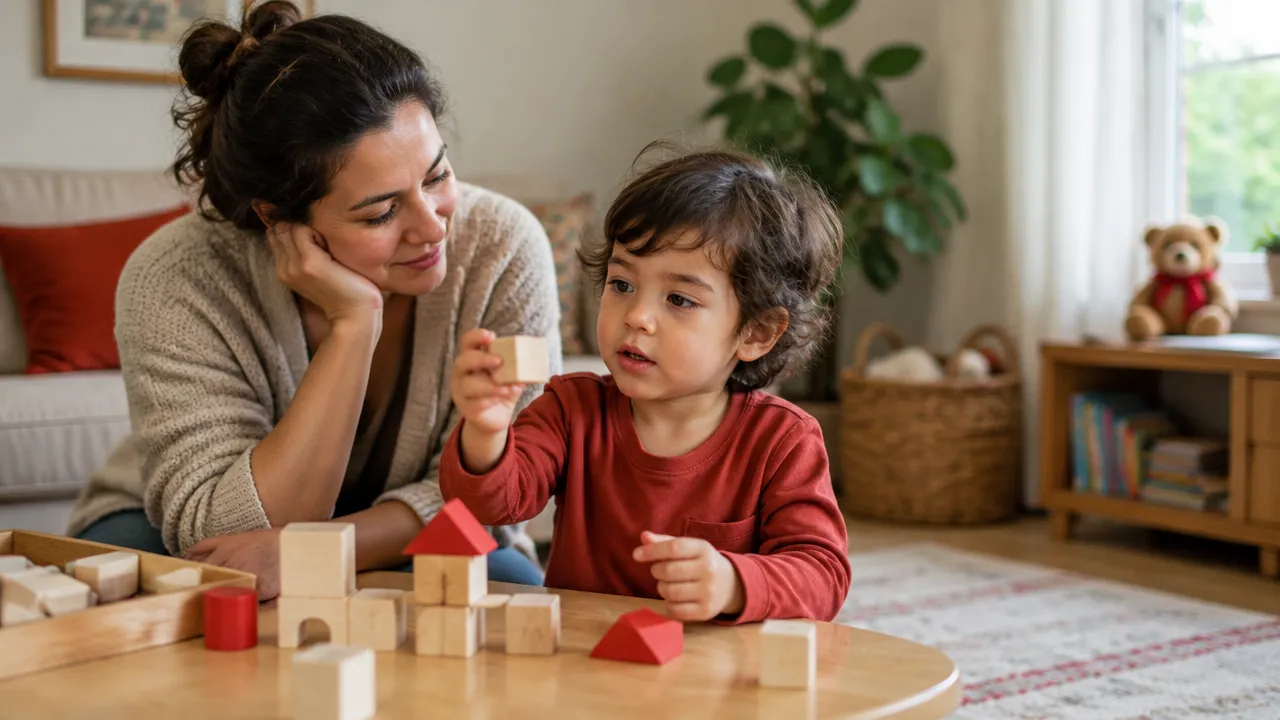
This relational view extends beyond childhood. Across life, growth can include recognizing emotional reactions, taking responsibility for their impact, and learning to respond rather than automatically repeat familiar patterns. Those choices affect not only individual well-being but also the quality of coexistence with other people.
When should a developmental milestone raise concern?
Milestones can help families notice a possible need for support, but they are not diagnostic tests or standards for judging a child. The CDC explains that its checklists are communication tools, with milestones selected at ages by which at least 75 percent of children are expected to show the listed skill. A checklist cannot establish whether an individual child has a developmental delay.
Notice patterns over time, including a missed skill, a skill the child has lost, or a persistent concern about how they move, communicate, play, or interact. The CDC says the American Academy of Pediatrics recommends general developmental screening at 9, 18, and 30 months, and autism screening at 18 and 24 months. See the CDC’s guidance on developmental monitoring and screening, and discuss concerns with the child’s healthcare provider.
Growth is lifelong, relational, and individual
Developmental psychology offers a framework for understanding change, not a rigid schedule for measuring worth. Its stages and theories are most helpful when they invite curiosity about a person’s needs, relationships, and conditions for growth. A human-centered perspective adds another question: as people develop, how do their choices expand responsibility, emotional awareness, and the ability to live well with others?
Frequently asked questions
How is developmental psychology different from child psychology?
Developmental psychology studies how people change across the lifespan, while child psychology focuses on development and behavior during childhood. The fields overlap in areas such as learning, emotions, and relationships, but a lifespan perspective also examines adolescence, adulthood, and aging. Both consider how people and their environments influence one another.
What are the key stages in human development?
Common life periods include infancy, childhood, adolescence, early and middle adulthood, and later adulthood. These are useful ways to organize development, not fixed stages that everyone enters or completes at the same age. Growth can involve progress, stability, or change, depending on a person’s experiences, health, relationships, and circumstances.
What are developmental tasks in psychology?
Developmental tasks are abilities, responsibilities, or adjustments that people commonly encounter during a period of life. Examples include learning to communicate, building a sense of identity, forming close relationships, or adapting to changing roles. They are broad guideposts, not a checklist that determines whether someone is growing correctly.
What are some red flags in developmental milestones?
Possible reasons to seek a developmental screening include a child missing one or more expected milestones, losing a skill they previously had, or a caregiver having an ongoing concern. A milestone checklist cannot diagnose a delay. Share concerns with the child’s healthcare provider and ask whether a formal screening or further evaluation is appropriate.