


We often think trauma moves through events alone. It does not. It also moves through language. A sentence repeated at the dinner table, in schools, at work, or during conflict can shape how people feel, hide pain, and pass fear forward.
Collective trauma grows when painful experiences are normalized, denied, or turned into rules for how people should feel.
We have seen this in ordinary moments. A child cries and is told to be strong. An adult speaks about harm and hears that the past is the past. A whole group learns to stay quiet, not because silence heals, but because silence feels safer.
Words can carry old wounds.
That is why some phrases matter more than they seem to. They sound simple. Sometimes they even sound wise. Yet they can keep emotional pain frozen inside families, teams, and communities.
Why repeated phrases shape group pain
Language gives meaning to experience. If the words around pain are cold, mocking, or dismissive, people often disconnect from what they feel. Over time, that disconnection becomes social habit. Then one person’s defense turns into a group pattern.
Research on linguistic features in trauma narratives and PTSD symptom severity shows that the language tied to trauma has measurable patterns. Negative emotion words, anger-related words, death-related words, body-related vocabulary, and even higher word count were linked with stronger symptom severity, especially intrusive symptoms. We think this helps us see a simple truth: words do not sit outside trauma. They are part of how trauma is carried and expressed.
Below are six phrases that can quietly keep collective trauma alive.
“That is just how life is”
This phrase often appears after loss, neglect, injustice, or repeated stress. It sounds like realism. But in practice, it can train people to accept avoidable suffering as normal.
When we say this too fast, we stop asking better questions. Was the harm preventable? Was someone ignored? Is this pattern being repeated because no one feels allowed to name it?
A few effects tend to follow:
- People stop trusting their pain as valid.
- Groups become numb to repeated harm.
- Responsibility gets replaced by resignation.
We once heard this phrase used in a family after every conflict. No one shouted. No one repaired. They just moved on. Years later, the same hurt was still there, only quieter.
“Be strong”
Strength is not the problem. The problem is when strength is defined as emotional shutdown. In many homes and workplaces, “be strong” really means “do not cry, do not need, do not speak.”
When strength is confused with suppression, trauma stays active under the surface.
People who hear this often enough may learn to function well while feeling cut off inside. From the outside, they look calm. Inside, they may be carrying fear, grief, or anger with no safe path for release.

Healthy strength looks different. It includes honesty, self-control, and the ability to stay present with pain without turning it into harm for others.
“Why are you still talking about that?”
This phrase pushes pain out of sight when it takes longer than others expect. It can be said with impatience, discomfort, or even false concern. Still, the message is the same: your healing is inconvenient.
Trauma rarely follows a neat timeline. A person may revisit the same memory because the body has not yet settled, or because the original pain was never witnessed with care.
When groups react this way, they often create two classes of feeling:
- Emotions that are allowed because they are brief and tidy.
- Emotions that are rejected because they expose deeper wounds.
- Stories that get cut off before meaning can form.
That split feeds collective trauma because unresolved pain does not vanish. It changes form. It may become cynicism, withdrawal, conflict, or cold humor.
“Everyone goes through it”
This phrase is often meant to comfort. Yet it can erase the unique weight of what someone has lived through. Shared pain exists, yes. But shared pain should not be used to flatten personal reality.
Validation is not the same as comparison.
When we tell someone that everyone goes through it, we may be trying to reduce shame. But we may also be sending a hidden message that their wound is too ordinary to deserve care. In groups, that habit can create emotional loneliness even in crowded spaces.
We think a better response is simple: “You are not alone, and what happened to you still matters.” That keeps connection without erasing difference.
“Forgive and forget”
Forgiveness can be real and healing. Forgetting is another matter. When this phrase is used too early, it asks people to skip truth, boundaries, and grief. It can protect image more than healing.
In many collective settings, this sentence appears after betrayal or abuse because people want peace fast. But peace without truth tends to be fragile. It asks the injured person to carry the cost of harmony.
Quick peace can hide deep damage.
We have seen this happen in groups that prized unity above honesty. Conflict disappeared on the surface. Underneath, distrust grew. Then one small event brought all the old pain back at once.
Forgiveness, if it comes, should come after reality is faced. Not before.
“Do not make it a big deal”
This is one of the most common phrases in trauma-filled systems. It teaches people to question their own reactions. Was it really that bad? Am I too sensitive? Should I just stay quiet?
Minimization is powerful because it does not always sound harsh. Sometimes it sounds calm, even reasonable. That is why it spreads so easily.
The damage usually unfolds in stages:
- Someone names hurt.
- The hurt is reduced or brushed aside.
- The person starts doubting their inner signals.
- The group keeps the pattern intact.
Once self-doubt settles in, people become easier to silence. That is one way collective trauma keeps reproducing itself across time.
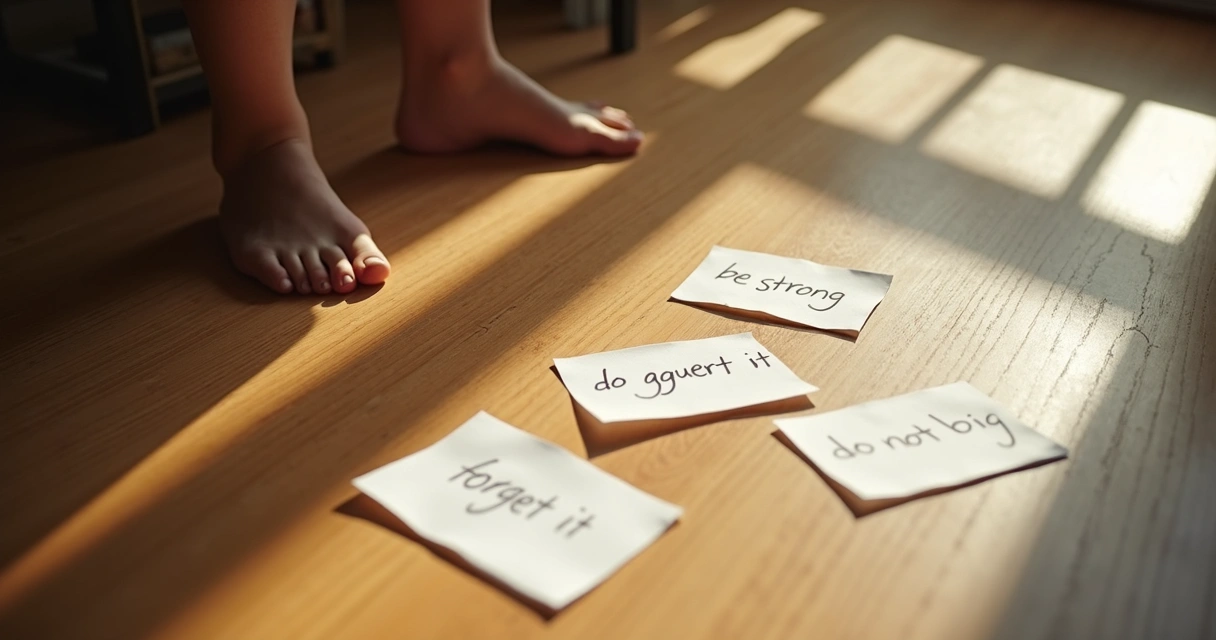
Conclusion
Collective trauma does not survive by force alone. It survives through repeated permission. Permission to deny. Permission to minimize. Permission to confuse silence with healing.
Changing language is one quiet way to interrupt inherited pain.
We do not need perfect words. We need honest ones. Instead of “be strong,” we can say, “You do not have to carry this alone.” Instead of “that is just how life is,” we can ask, “How did this become normal?” Those small shifts open space for truth, dignity, and repair.
If we want healthier communities, we must listen to the phrases we repeat without thinking. Some keep people asleep inside pain. Others help them come back to themselves.
Frequently asked questions
What is collective trauma cycle?
A collective trauma cycle is a repeated social pattern where pain is passed through families, groups, or communities without being faced in a healthy way. It can move through beliefs, habits, fear, silence, and language. The original event may end, but the emotional pattern keeps repeating.
How do phrases reinforce trauma?
Phrases reinforce trauma when they deny pain, shame emotion, or pressure people to move on before healing happens. Repeated language shapes what a group sees as normal. If the words around suffering are dismissive, people learn to hide wounds instead of working through them.
Which phrases should I avoid?
We suggest avoiding phrases that minimize, rush, or erase pain. Examples include “be strong,” “forgive and forget,” “everyone goes through it,” “that is just how life is,” “why are you still talking about that?” and “do not make it a big deal.” The common feature is that they reduce emotional truth.
How can I break trauma cycles?
We can start by speaking with more care and honesty. Listen without rushing the person. Name harm clearly. Allow grief, anger, and fear to be spoken without mockery. Set boundaries where needed. In many cases, trauma cycles begin to weaken when truth becomes safer than silence.
Why are these phrases harmful?
These phrases are harmful because they teach people to distrust their own experience. Over time, that weakens emotional awareness and keeps groups stuck in old defense patterns. What sounds small in one moment can become a shared rule that blocks repair for years.